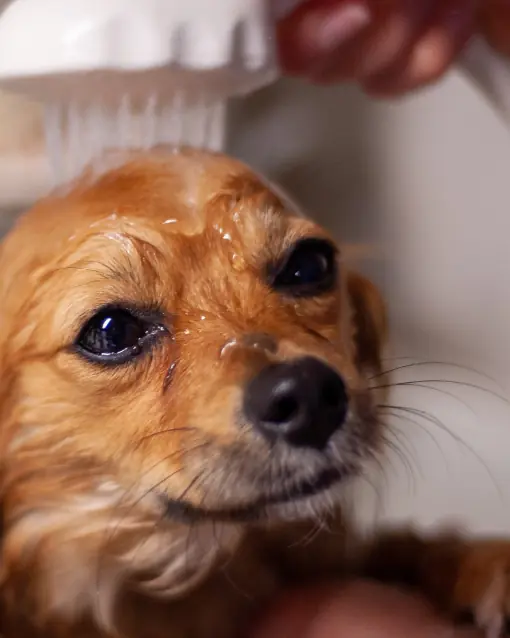
What a full groom actually involves
We start with a hands-on look at the coat before any water touches it. Matting has to be found dry: once it is wet it tightens, and a mat that could have been brushed out becomes a mat that has to be cut out.
Then bath, condition, and a full blow-out with a high-velocity dryer to lift the dead undercoat. For double-coated breeds this de-shed is the whole point of the visit — it is what stops your sofa disappearing under hair every spring.
The haircut is cut to the breed: a schnauzer's furnishings, a poodle's topknot, a shih tzu's face shape. Tell us if you want it shorter for the summer and we will, but we will also tell you honestly if shaving a double coat is a bad idea for your particular dog, because it usually is.
Finish is nails, ears, eyes, a sanitary trim and paw pads. Then you get your dog back, dry, and we drive away with the mess.
One groomer, one dog, one hour
A salon runs several dogs at once, which means yours waits in a crate before and after, in a room with other stressed animals, with a drying cage doing the work a person should be doing.
In the van there is one groomer and one dog, and when it is over your dog goes back through its own front door. Nervous dogs, elderly dogs and dogs who have had a bad salon experience are the ones this changes most.
Breeds we see most in Qatar
Shih tzus, Maltese, poodles and doodle crosses — coats that keep growing and genuinely need cutting on a schedule, not when they start to look untidy.
Huskies, German shepherds and other double coats — where the job is de-shedding, never shaving, and where the van's dryer does in one visit what a brush at home cannot do in ten.
Small terriers and Yorkies, where the face, feet and sanitary trim matter more than the body length.